
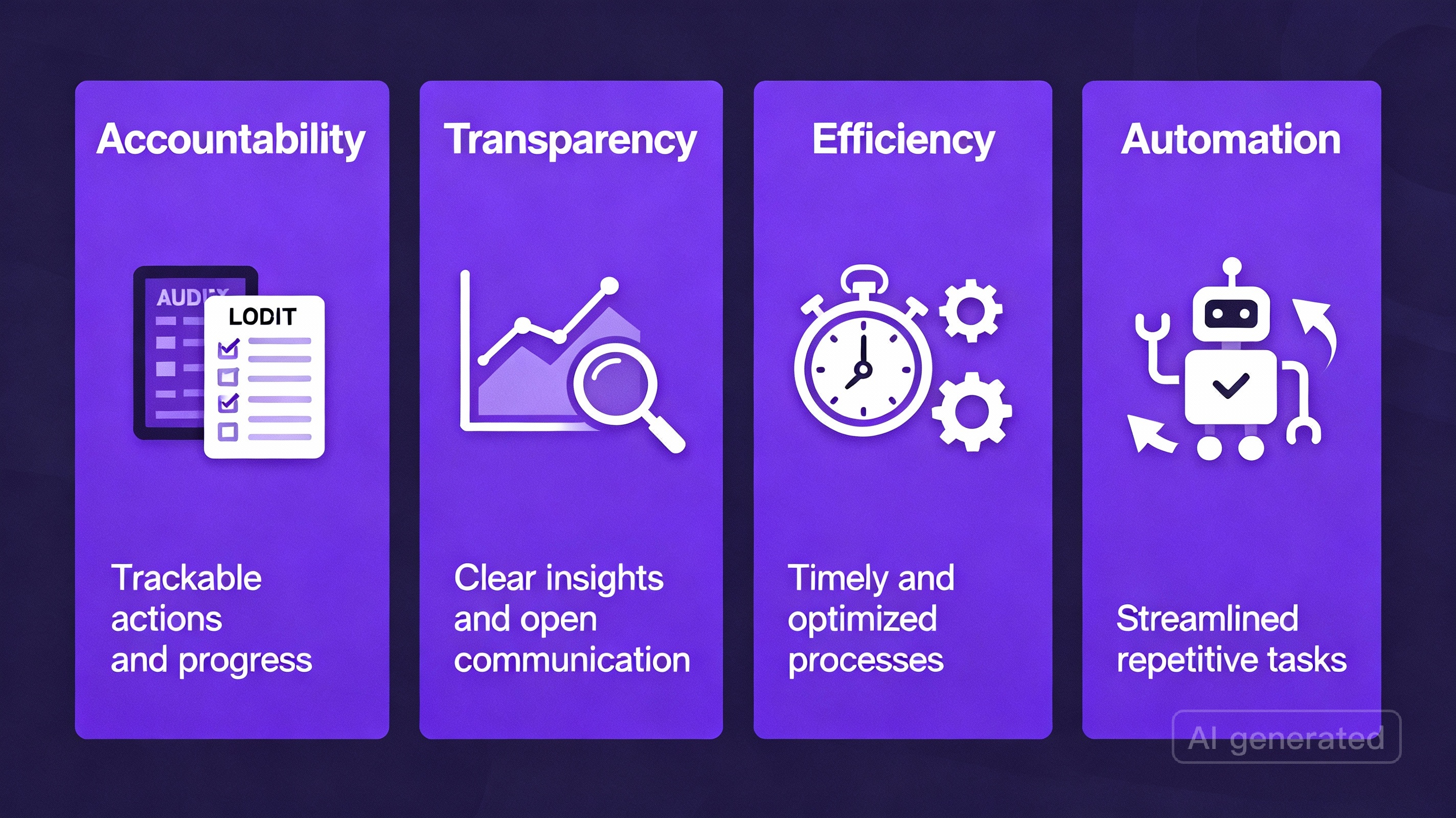
Zendesk is renowned for its focus on four pillars—Accountability, Transparency, Efficiency, and Automation—which set it apart from traditional support tools. Here’s how these pillars deliver exceptional customer experience, illustrated with real-world examples.
Accountability
Zendesk provides audit logs and detailed ticket histories so every action is attributed to a specific agent at a specific time. This direct tracking reduces confusion, improves agent performance, and pinpoints top performers. For example, a company that implemented Zendesk through Systato saw enhanced accountability: clear logs showed who addressed each customer request, helping managers identify top agents and quickly resolve escalations. This led to a noticeable uptick in customer satisfaction and team reliability. Airbnb, a global hospitality leader, uses Zendesk's accountability features to manage millions of guest and host interactions—ensuring that each query is transparently handled and tracked from start to finish.
Transparency
Transparent reporting and analytics provide managers with insights into ticket volumes, agent handling times, and service quality in real-time. Zendesk’s analytics allowed managers at Airbnb and other leading companies to spot dips in customer satisfaction early and respond with targeted training or workflow changes. Zendesk’s AI solutions are also praised for transparency, providing detailed logs of AI-driven actions and offering “white box” explanations for AI decisions. This ensures both customers and agents understand why the system made certain choices—an approach that earned praise for complying with strict data privacy regulations and improving trust in AI-aided service.
Efficiency
Zendesk brings powerful workflow automation and integration capabilities. Agents use macros, templates, and integrations to solve customer issues rapidly and consistently. Companies using Zendesk reported handling 60% more tickets without adding headcount, while average handle time was slashed by 35% thanks to streamlined workflows and unified communication hubs. For example, Zendesk’s implementation at an e-commerce firm allowed for a dramatic efficiency boost: more inquiries managed with fewer resources, while maintaining high service standards. The Openprise case study documented a 25% gain in overall support efficiency by automating repetitive data processes.
Automation
Repetitive tasks—like ticket assignment, status updates, and customer notifications—are handled automatically by Zendesk triggers and automations. AI chatbots field simple inquiries across all channels, resolving up to 70-80% of routine issues without agent intervention. This lets agents focus on complex or sensitive cases. Businesses benefit from scalable support that can handle seasonal peaks or rapid growth without costly staffing increases. Zendesk’s customisable AI integrates with both traditional and modern channels (email, WhatsApp, chat), ensuring automated support is consistent everywhere customers reach out.
Real-Life Impact
- Airbnb uses Zendesk for seamless guest and host support worldwide, enabled by robust tracking, transparent reporting, and automation, reducing resolution times and enhancing customer trust.
- E-commerce companies reported a 60% increase in tickets handled and a 35% reduction in average resolution time after implementing Zendesk automation and efficiencies.
- Zendesk’s customer community, Luminaries, encourages best-practice sharing and showcases detailed, authentic case studies—proving the platform’s impact across sectors.
These real-world results affirm why Zendesk’s four pillars aren’t just theoretical—they deliver measurable business value and transform customer service from a cost center into a strategic asset,
Comments
0 comments
Article is closed for comments.