
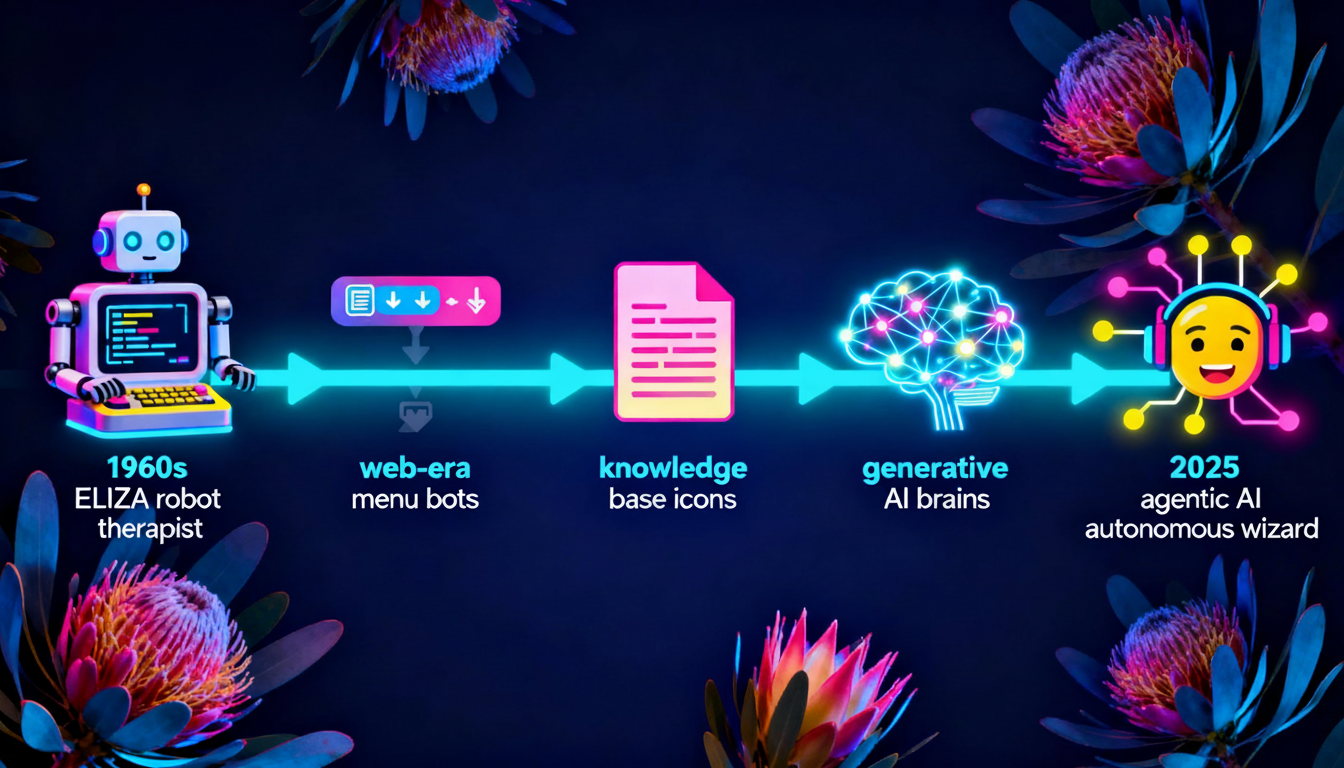
If you find yourself deeply involved in Zendesk implementations like I am at CX Experts in South Africa, you have likely encountered a wide range of chatbot experiences—some that perform exceptionally well and others that fail quite dramatically. Over time, I have witnessed everything from outdated scripted bots that frustrate users on betting platforms to sophisticated, agentic AI bots that can resolve over 80% of customer queries almost instantly. Drawing on years of experience optimizing these systems for clients in retail and gaming sectors, I want to share a comprehensive timeline of chatbot evolution, filled with practical insights and lessons that can help you enhance your own chatbot setups.
The Humble (and Brittle) Start: Scripted Bots in the 1960s-Web Era
Imagine the year 1966, when ELIZA, developed at MIT, simulated a therapist by using simple pattern-matching techniques. Its responses were based on a straightforward "if the user says X, reply Y" logic. Fast forward to the early days of web-based customer service, and chatbots were mostly "choose-your-own-adventure" style, presenting users with menus to select frequently asked questions. These bots could handle about 15-30% of chats, deflecting simple inquiries before handing off more complex or colloquial interactions—like someone saying "cheers mate"—to human agents.
In practical terms within my work, this translates to basic Zendesk triggers that handle common issues such as password resets. These simple automations can easily resolve about 20% of high-volume tickets. However, it is crucial to rigorously test free-text inputs because if a user submits a query that falls outside the scripted paths, the bot can get stuck in frustrating loops, leading to a poor customer experience.

Level Up: Knowledge Bases Join the Party (2000s Shift)
As companies grew tired of the limitations of endless scripting, they started integrating chatbots with knowledge base (KB) article searches. This approach allowed bots to suggest relevant articles, which increased deflection rates to around 50%. Customers could receive helpful self-service hints without navigating through full menus. However, the challenge remained that few users wanted to read lengthy 2,000-word documents during a chat session.
From my perspective, a professional best practice is to use Zendesk search macros that automatically suggest the most relevant articles based on the user's query. Diving into analytics to monitor containment rates helps refine your knowledge base taxonomy. When done well, this strategy can achieve over 40% deflection on support queries, especially for common topics like policy checks.

The AI Awakening: Generative Bots (~2022 Onward)
The introduction of large language models (LLMs) marked a new era for chatbots. These generative bots can understand user queries more deeply, search across knowledge bases, and generate concise, natural language summaries. This advancement has pushed deflection rates beyond 60%, as bots no longer simply direct users to articles but provide direct, tailored answers.
I have upgraded numerous Zendesk Answer Bots to generative mode by crafting specific prompts such as "Extract steps for X in simple bullet points." Through A/B testing with customer satisfaction surveys (BSAT), I iteratively improve bot responses. This approach has been a game-changer for e-commerce scenarios like answering "Where's my order?" queries. However, to maximize effectiveness, these bots still need to be integrated with APIs to access real-time data.
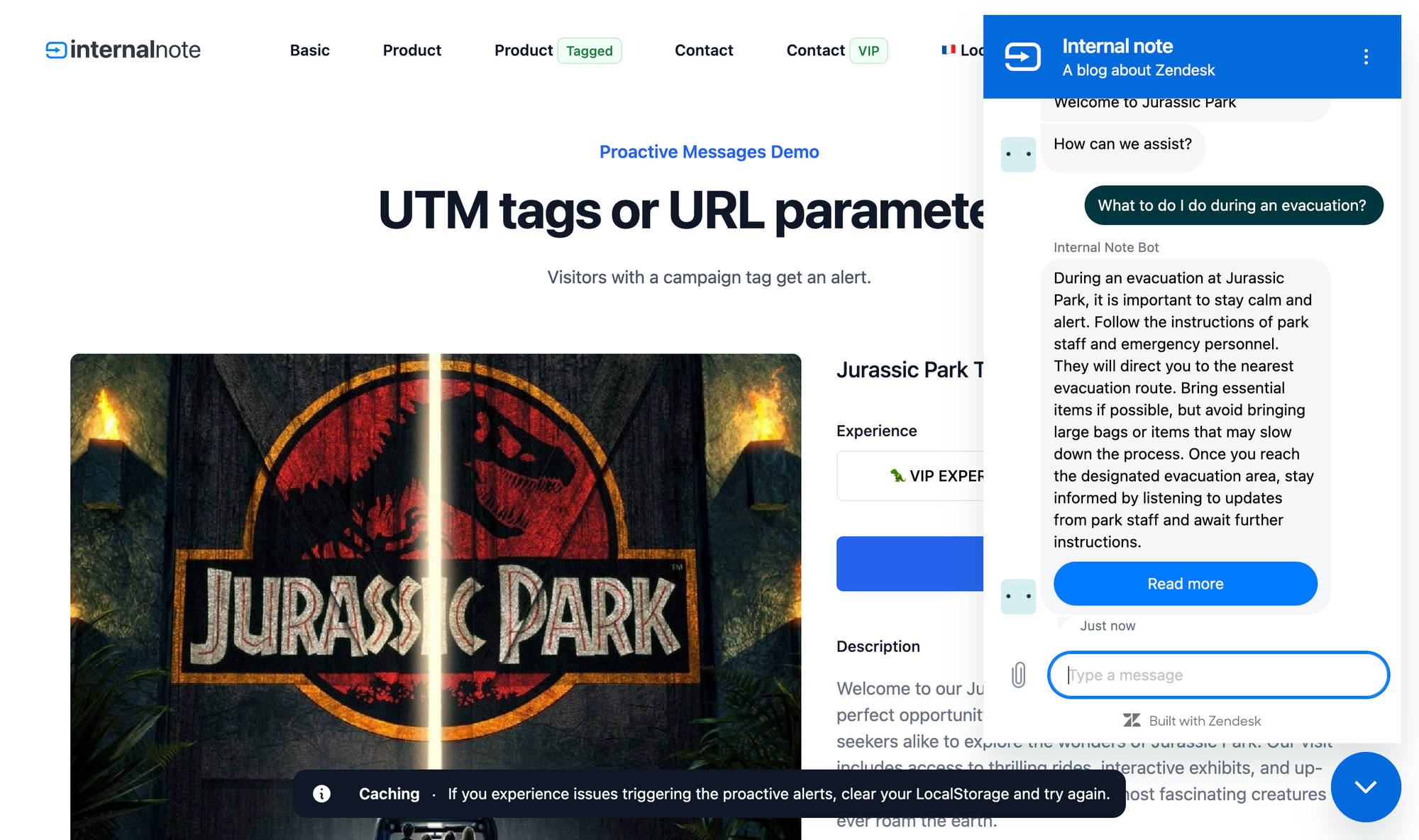
Now We're Talking: Agentic AI – Your Unscripted Heroes (2025 Reality)
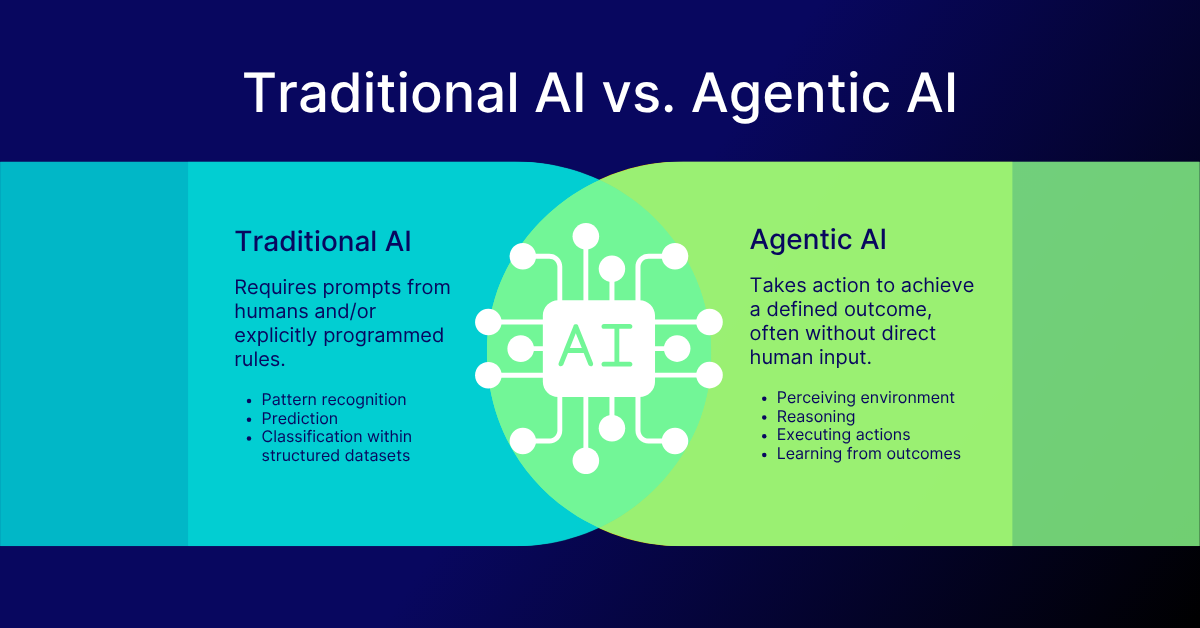
Agentic AI bots represent a significant leap forward. These autonomous systems are capable of empathy, holding conversational context, and integrating seamlessly with multiple APIs for complex tasks such as order tracking or medical pre-authorization, managing over 10 data fields without human intervention. They achieve deflection rates between 80-90%, driven solely by sophisticated business rules.
Speaking from experience with projects in South Africa, integrating these bots with betting APIs enables balance checks, while Shopify-style inventory queries can be handled through Zendesk AI Agents. The best practice is to start with custom instructions that prioritize empathy—for example, "Express understanding for losses"—pilot these bots on high-volume workflows, and carefully monitor return on investment. The results are impressive, delivering substantial cost savings and improved customer experiences.
Quick Evolution Snapshot
| Bot Phase | Era | Deflection | My Favorite Hack |
|---|---|---|---|
| Scripted | 1960s-Web | 15-30% | FAQ triggers |
| KB-Linked | 2000s | ~50% | Search macros |
| Generative | 2022+ | 60%+ | Prompt engineering |
| Agentic | 2025 | 80-90% | API + empathy flows |
Why This Matters for Your CX Stack (Costs & Human Magic)
Zendesk’s pay-per-resolution pricing model, which ranges roughly from R18 to R36 depending on volume, proves highly cost-effective when combined with 24/7 bot operations that significantly reduce average handle time (AHT). This allows human agents to focus on more complex and nuanced customer issues. For my clients, deploying agentic bots to handle confirmation tasks has resulted in massive cost savings without threatening jobs; instead, these bots elevate the overall service quality.
In summary, chatbots have evolved from simple chat gimmicks into powerful customer experience multipliers. Having worked extensively within Zendesk environments, I encourage you to adopt agentic bots now, measure deflection rates weekly, and watch customer satisfaction soar. What has your experience been with chatbots? I’d love to hear your stories—please share them below!
Comments
0 comments
Article is closed for comments.